
How Decommissioning CRAC/CRAH Units Improves PUE
Retiring excess CRAC/CRAH units reduces overcooling, cuts fan and compressor energy, and measurably improves data center PUE.
By Nate Bruns
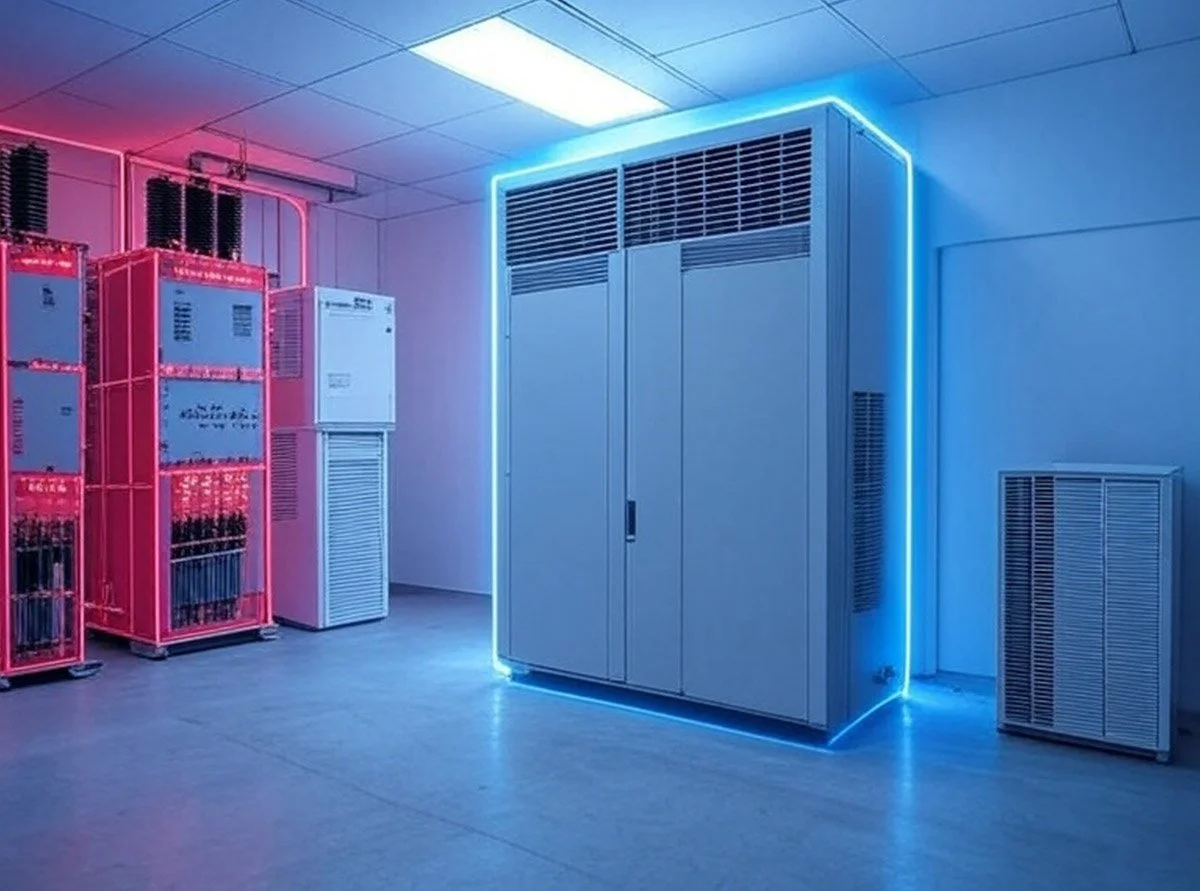
Decommissioning CRAC (Computer Room Air Conditioning) or CRAH (Computer Room Air Handling) units can improve Power Usage Effectiveness by reducing unnecessary cooling energy, eliminating overcapacity, and improving overall cooling efficiency.
CRAC/CRAH units fall under Total Facility Power, not IT load, so reducing their energy use directly improves PUE.
Why decommission cooling units?
Over time, data centers consolidate IT loads, replace older servers with more efficient hardware, move workloads to the cloud, and retire legacy infrastructure. Cooling infrastructure, however, often stays unchanged, resulting in overcooling and wasted energy.
How it improves PUE
1. Eliminates overcooling and short cycling. Too many active units create inefficient airflow and short-cycling. Removing excess units ensures only the right number operate. Less runtime means less power and better PUE.
2. Reduces fan and compressor energy. CRAC units use compressors and CRAH units use fans on chilled-water loops, both are high consumers. Removing unneeded units strips parasitic load from the power equation.
3. Lowers maintenance and improves reliability. Fewer units enable more effective hot/cold-aisle containment and variable-speed cooling.
4. Reduces redundancy waste. Many facilities were built with N+2 or 2N cooling. In practice, fewer units may be needed to maintain SLAs.
5. Unlocks efficient alternatives. Removing legacy units makes room for rear-door heat exchangers, in-row cooling, liquid cooling, and outside-air economization.
Example impact
A single CRAH unit may draw 3–10 kW depending on fan speed and load. Removing just three unneeded units running 24/7 at 5 kW saves about 131,400 kWh per year, thousands of dollars and a measurable PUE improvement.
Related resources
Racks: The Foundation of Every Data Center
Rack and stack done right is the difference between a data center that hums for decades and one that becomes an operational nightmare. A field guide to the five-phase process, patching, and the principles that matter.
Read more →
What Goes Into an ILA Hut Build
A complete design and build-out breakdown of an ILA hut, structure, power, cooling, optical equipment, telemetry, and our five-phase delivery process.
Read more →
AI Is Fueling a Surge in ILA Hut Demand
AI workloads are driving record demand for in-line amplifier huts. Here is why ILA huts have become critical infrastructure for next-generation networks.
Read more →