
What Is Colocation? Benefits Explained
Colocation lets companies host equipment in third-party data centers for lower cost, faster scale, and higher reliability. Here’s how the strategy works.
By Nate Bruns
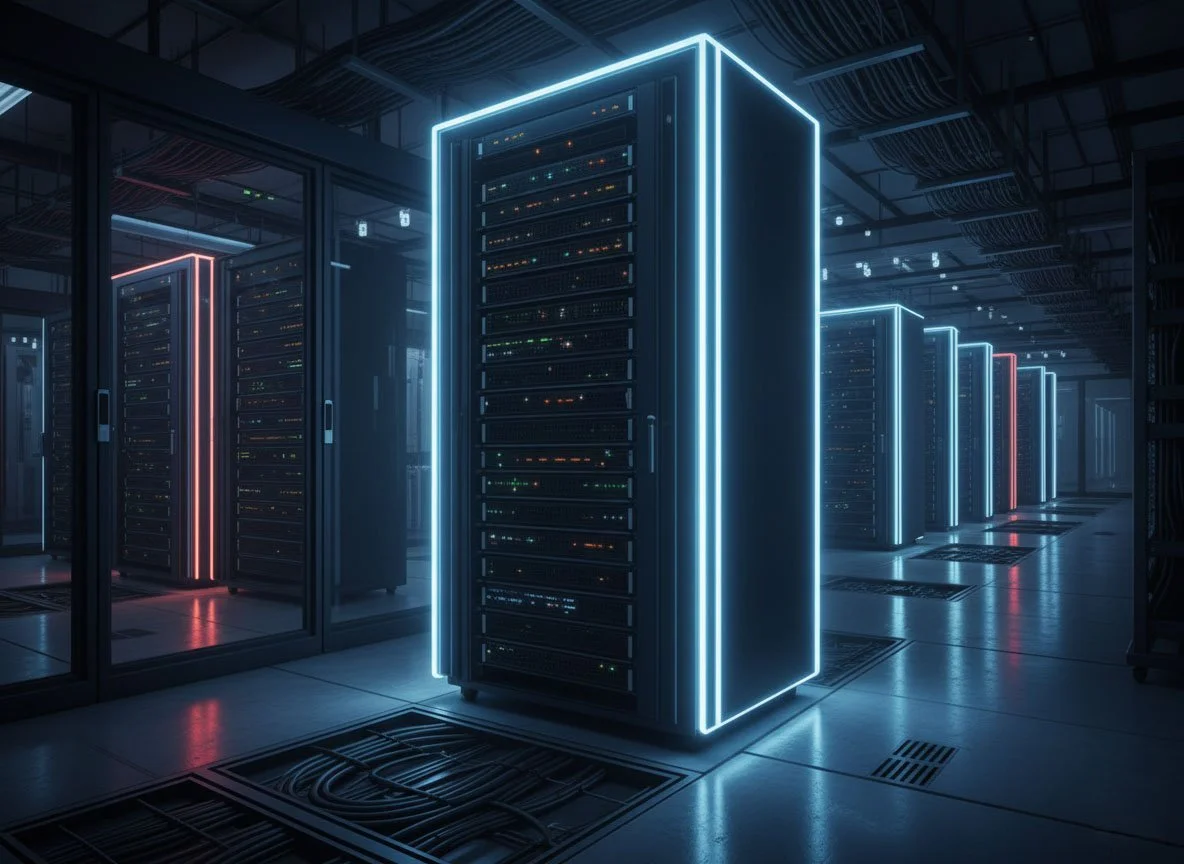
Colocation has regained popularity as companies seek cost-effective, scalable infrastructure without the expense of building new data centers. It also offers proximity to cloud providers, improved efficiency, and access to sustainable power.
Colocation (colo) is a strategy where a company rents space within a third-party data center rather than owning and operating its own.
The operator provides physical infrastructure (power, cooling, racks, and network connectivity), physical security and maintenance, and redundant systems for uptime. The tenant provides their own servers, storage, and networking gear, or rents managed equipment within that space.
The strategy behind colocation
1. Cost efficiency. Building and maintaining a private data center is capital-intensive. Colocation shifts spending from CapEx to OpEx, and shared infrastructure lowers per-tenant cost for power, cooling, and security.
2. Scalability and flexibility. Colo facilities allow rapid expansion or downsizing without major construction, ideal for companies with fluctuating compute needs or multi-region growth.
3. Network proximity. Colos sit near major internet exchange points and cloud on-ramps (AWS Direct Connect, Azure ExpressRoute, Google Cloud Interconnect), reducing latency and improving application performance.
4. Reliability and compliance. Modern facilities are built to Tier III or Tier IV standards, offering N+1 or 2N redundancy and high availability, plus security and compliance certifications (ISO, SOC, HIPAA) that are costly to achieve independently.
5. Sustainability. Many enterprises pursue colocation to access green power and optimized cooling, and hyperscale providers often post better PUE than smaller legacy facilities.
Why operators decommission due to colocation
Decommissioning because of a colocation move is a strategic business decision, not a failure:
- Shifting to a more efficient model by migrating workloads to a provider and retiring outdated infrastructure
- Consolidating footprint from many low-utilization sites into fewer modern facilities
- Outsourcing non-core functions so teams can focus on their core business
- Avoiding CapEx for expensive power and cooling upgrades
- Leveraging geographic reach to place workloads closer to customers
- Escaping power constraints by moving to colos with better availability or renewables
In each case, a clean, compliant decommission of the legacy site is what makes the transition smooth.
Related resources
Racks: The Foundation of Every Data Center
Rack and stack done right is the difference between a data center that hums for decades and one that becomes an operational nightmare. A field guide to the five-phase process, patching, and the principles that matter.
Read more →
What Goes Into an ILA Hut Build
A complete design and build-out breakdown of an ILA hut, structure, power, cooling, optical equipment, telemetry, and our five-phase delivery process.
Read more →
AI Is Fueling a Surge in ILA Hut Demand
AI workloads are driving record demand for in-line amplifier huts. Here is why ILA huts have become critical infrastructure for next-generation networks.
Read more →