
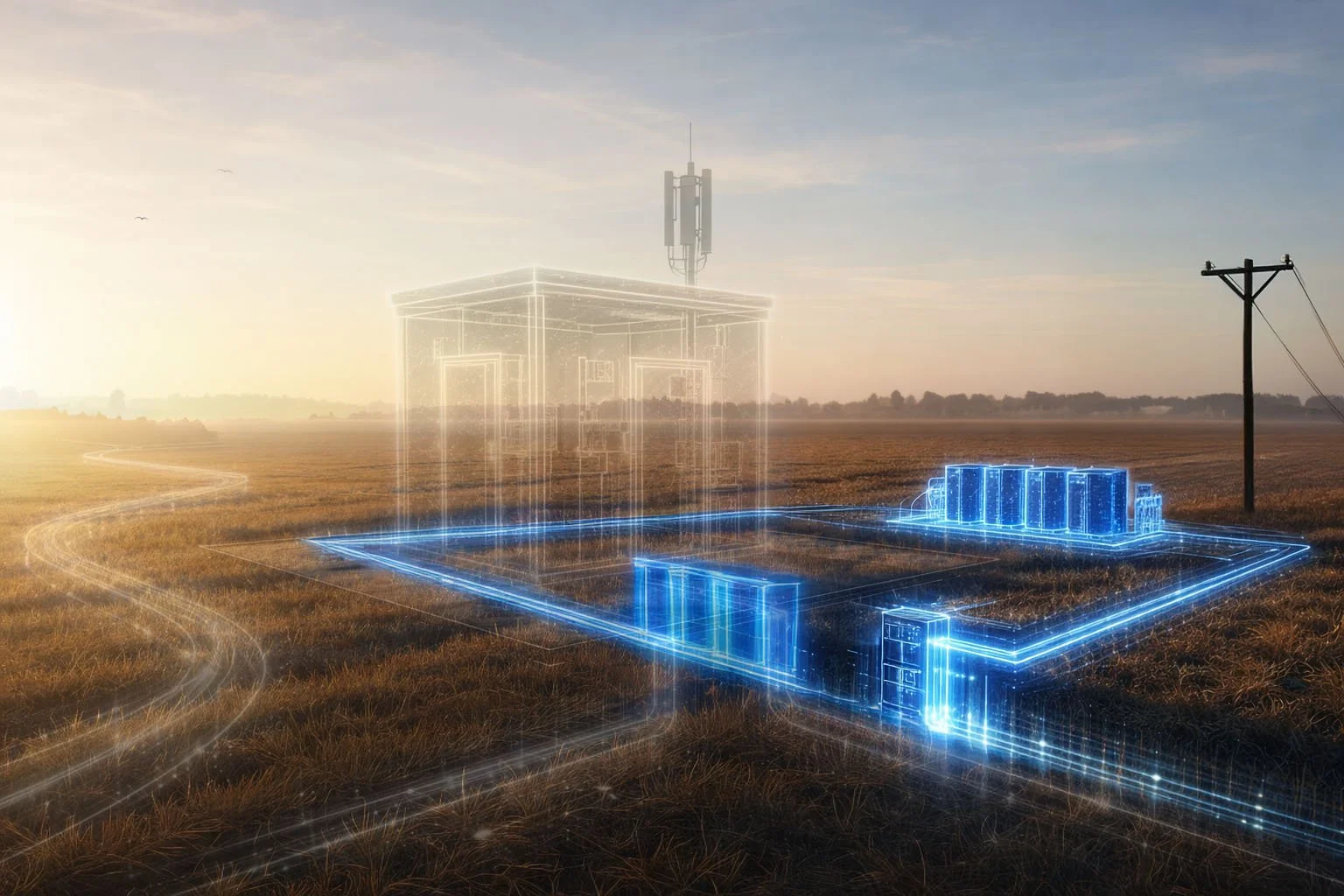
The DC plant is the heartbeat of an ILA hut. While fiber carries the signal, nothing moves without power, and a momentary loss of DC can instantly darken an entire long-haul route, making power reliability just as critical as fiber quality.
In an ILA environment, the DC plant delivers clean, stable –48V DC to sensitive optical equipment regardless of what is happening on the utility side. Incoming AC is conditioned through rectifiers, isolating the network from voltage swings, noise, and transient faults so amplifiers operate within the tight tolerances required for consistent optical performance.
Battery systems transform power from merely available to truly resilient. When utility power fails, for seconds or hours, the batteries assume the full load instantly, with no interruption to amplification. In remote huts, where outages may be frequent and response times long, the battery plant is often the sole reason the route remains in service.
As optical systems evolve, power demands rise. Higher-output amplifiers, denser wavelength counts, and AI-driven traffic growth all increase current draw and thermal load. Modern DC plants must scale efficiently while maintaining visibility, alarms, and remote control to support unattended operation.
Beyond raw power delivery, the DC plant is a protective layer for the entire hut. Proper grounding, monitoring, and redundancy prevent localized issues from cascading into multi-site outages, keeping long-haul networks lit, stable, and resilient no matter how remote the location.