
Abandoned Cabling and Data Center Efficiency
Removing abandoned cabling improves airflow, reduces cooling demand, and lowers fire risk, all of which help PUE.
By Nate Bruns

Decommissioning abandoned cabling in data centers improves Power Usage Effectiveness by enhancing airflow, reducing cooling requirements, and improving operational efficiency, all of which lower Total Facility Power, the numerator in the PUE equation.
Abandoned cable is wiring that is installed but no longer connected to anything in service. It accumulates over years of moves, adds, and changes, and it tends to collect under raised floors, in overhead trays, and inside racks where it quietly causes problems.
Why abandoned cabling hurts efficiency
- Blocked airflow. Dense bundles of dead cable obstruct under-floor and in-rack airflow, forcing the cooling plant to work harder to hit the same temperatures.
- Higher cooling demand. Poor airflow creates hot spots, which drive up fan speeds and chiller load, directly worsening PUE.
- Fire and code risk. The National Electrical Code requires removal of accessible abandoned cable that is not tagged for future use, because the cable jacket adds fuel load. Leaving it in place is both an efficiency and a safety liability.
- Operational drag. Excess cable makes troubleshooting slower and increases the chance of accidental disconnection during maintenance.
Removing it the right way
- Trace and verify. Confirm each run is truly out of service before cutting, careful labeling and as-built documentation prevent costly mistakes.
- Remove to code. Pull abandoned cable back to its origin per NEC and local requirements, separating copper and fiber for recycling.
- Restore airflow. With pathways cleared, re-dress active cabling, install blanking panels, and confirm containment so cooling can be tuned down.
- Document. Update floor plans and cable schedules so the gains are preserved through future changes.
Clearing abandoned cabling is a low-cost, high-value step: it improves airflow and cooling efficiency, reduces fire load, and makes the entire facility easier to operate.
Related resources
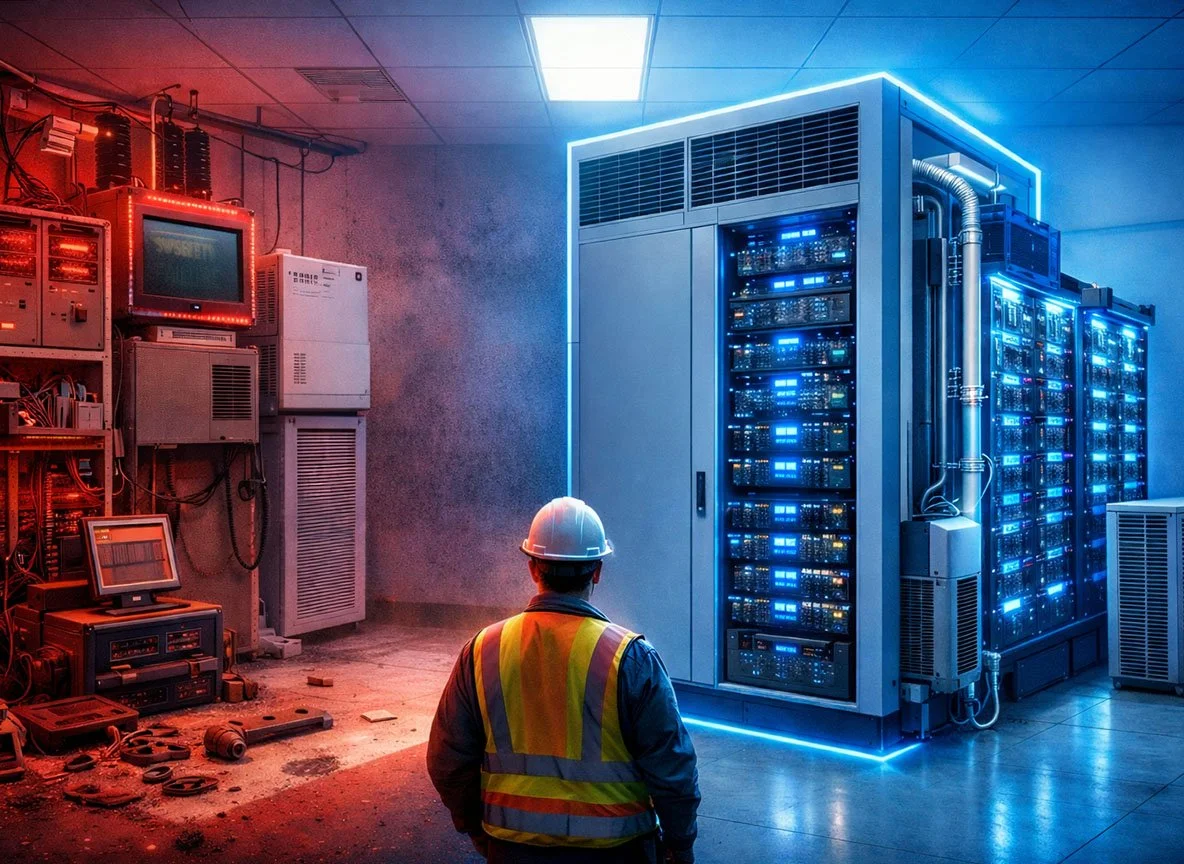
Unlock AI Capacity Without Building a New Data Center
Decommissioning legacy infrastructure can free up power, cooling, and space for AI workloads, without the multi-year wait of a new build.
Read more →
The 7-Phase Data Center Decommissioning Checklist
A complete 7-phase checklist covering inventory, data security, equipment removal, asset recovery, site restoration, and final review.
Read more →